


Brushed vs Brushless RC Cars: A Practical Buying and Upgrade Guide

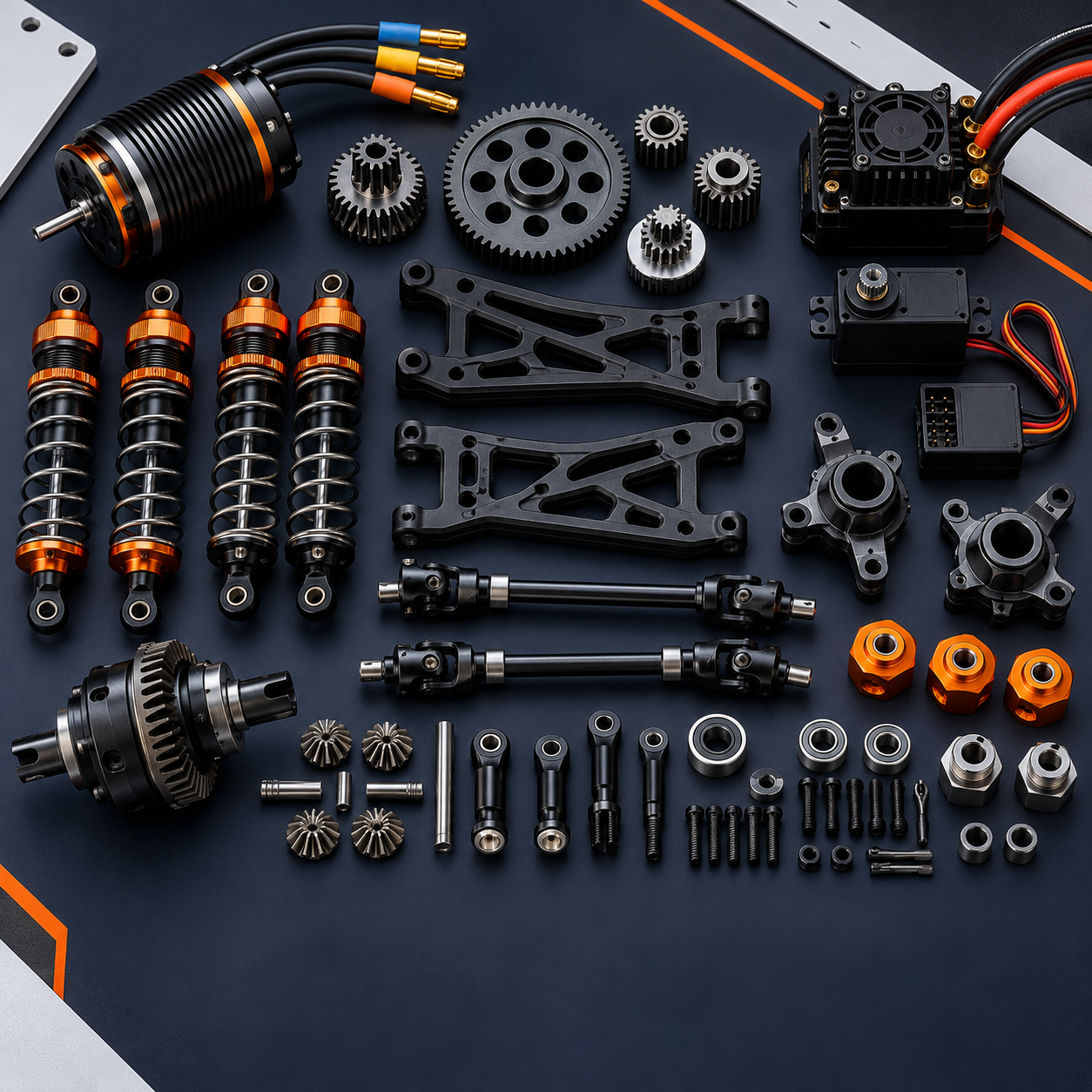
Choose an RC power system for the driving you want, not simply for the word “brushless”. For a crawler, smooth starts and predictable braking may matter more than maximum speed. For a faster off-road model, acceleration, gearing and heat management become especially important. The motor, ESC, battery and drivetrain need to work as a system.
What is the difference?
A brushed motor uses brushes and a commutator to switch current through its windings. A brushless motor uses electronic switching controlled by its ESC. That difference changes the electronics required and removes brush wear from a brushless motor, but it does not eliminate bearings, heat, dirt or maintenance.
| Question | Brushed | Brushless |
|---|---|---|
| What ESC is needed? | One explicitly rated for the brushed motor and battery | One explicitly supporting the brushless motor type, voltage and load |
| Is slow driving possible? | Yes, with a suitable motor, gearing and ESC | Yes; startup quality depends on the particular control system |
| What wears? | Brushes, commutator and mechanical components | Bearings and other mechanical components; no motor brushes |
| Does the label guarantee speed? | No | No |
Brushless is not automatically faster—or smoother
Top speed depends on motor characteristics, battery voltage, gearing, tyre diameter and load. A brushless system designed for slow crawling can behave very differently from a high-speed sensorless system. Do not compare a crawler and a basher using motor type alone.
Sensored systems use rotor-position information to help control the motor, particularly at startup. Some crawler systems also use field-oriented control, or FOC. HOBBYWING's Fusion crawler system is one manufacturer example of a sensored brushless system intended for low-speed control. That does not mean every brushless motor includes sensing or FOC, or that every motor and ESC can be mixed.
What does kV mean?
Motor kV describes approximate no-load revolutions per minute per volt. It is not kilovolts and is not a torque rating. Within a suitable setup, increasing voltage can increase potential motor speed, but the ESC, motor, battery and drivetrain must all support it. Higher kV is not automatically the better crawler choice. Brushed turn counts and brushless kV are not a universal one-to-one conversion.
When does a brushed model make sense?
A brushed model can be a sensible choice when its driving behaviour, price and parts support match your needs. Before replacing its motor, check whether the real problem is worn brushes, a binding drivetrain, poor gearing, weak steering or unsuitable tyres. Repairing the fault may be more useful than changing the entire power system.
Before a brushless conversion
- Confirm motor diameter, length, mounting pattern and chassis clearance.
- Match the motor shaft and pinion bore, plus the correct gear pitch or module.
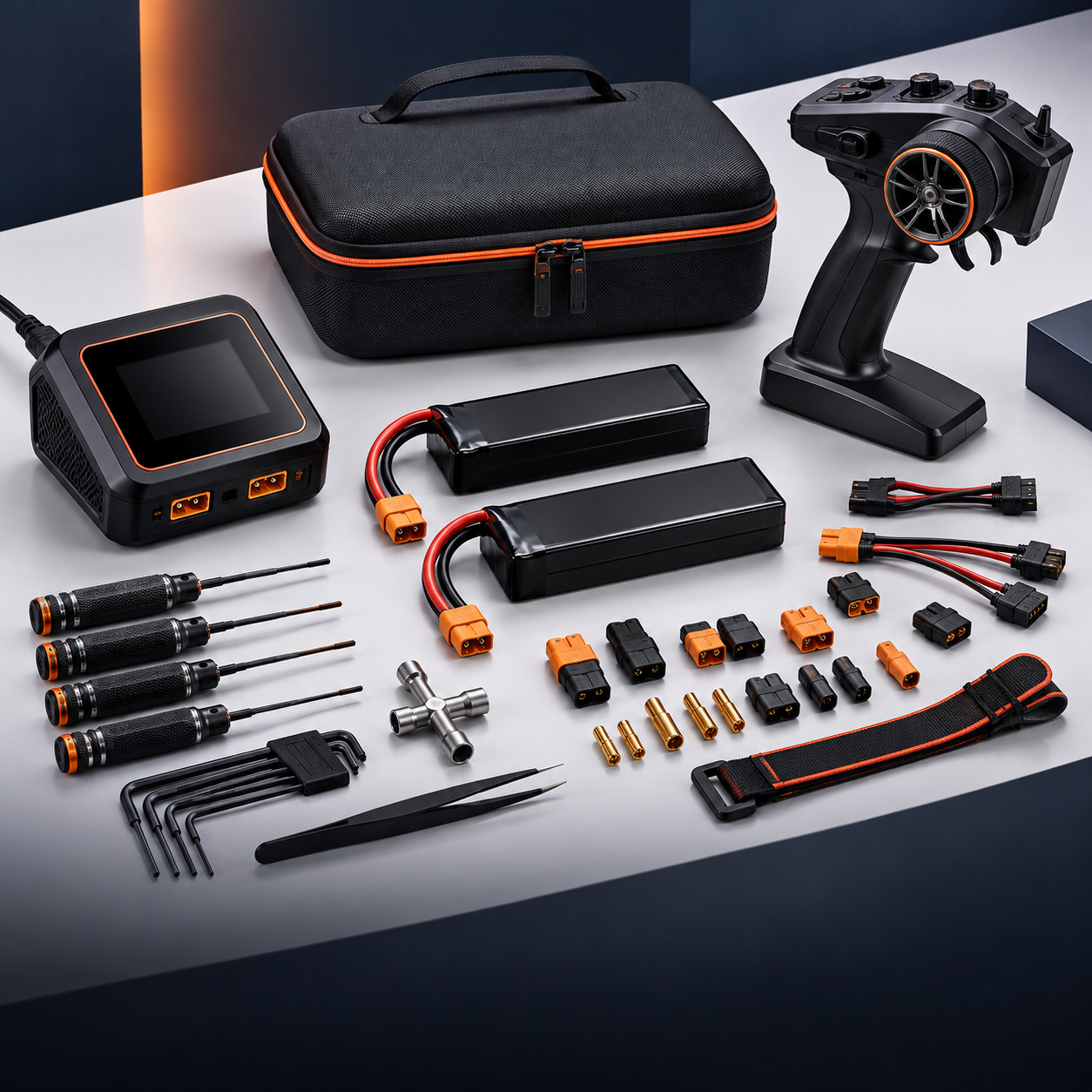
- Check battery chemistry, cell count, current capability and connectors.
- Confirm the ESC supports the motor type and any required sensor connection.
- Check BEC output against the receiver and steering servo's voltage limits.
- Confirm the radio interface. An integrated receiver/ESC may require a separate compatible receiver.
- Review drivetrain strength, gearing, cooling and brake behaviour.
An adapter or physically fitting motor does not establish electrical compatibility. Calibrate and programme the ESC according to its manual, test with the wheels clear of the ground, and monitor the first short runs for abnormal heat or binding.
A useful buying rule
For your first complete vehicle, compare how and where you will drive before choosing motor type. For an upgrade, write down the problem you want to solve and confirm the entire conversion before ordering. Browse ESCs and motors, then check our crawler upgrade priorities and battery compatibility guide.
Technical references
Consult the exact equipment manual. Examples: HOBBYWING brushed crawler ESC specifications and HOBBYWING Fusion sensored brushless crawler specifications. Their ratings apply to those products, not every RC system.
-
Posted in
Buying Guides, Motors, RC Upgrades


